Hubungan Pemberian Makanan Pendamping Asi (MP-ASI) dengan Status Gizi Anak Usia 1-3 Tahun di Kota Padang Tahun 2012
DOI:
https://doi.org/10.25077/jka.v3i2.83Abstract
Abstrak
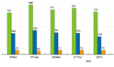
Makanan pendamping ASI (MP-ASI) adalah makanan padat yang mengandung nutrien lengkap yang diberikan kepada bayi mulai usia 6 bulan disamping ASI eksklusif untuk mencapai tumbuh kembang yang optimal. Tujuan penelitian adalah untuk mengetahui hubungan antara usia pemberian MP-ASI dan jenis MP-ASI dengan status gizi. Penelitian ini merupakan studi cross sectional yang dilaksanakan pada bulan Mei-November 2012 pada anak usia 1-3 tahun yang berdomisili di Kota Padang. Pengumpulan data karakteristik responden, usia pemberian MP-ASI, dan jenis MP-ASI dilakukan dengan wawancara terpimpin. Pengukuran status gizi dilakukan berdasarkan BB/TB Z-score. Analisis statistik yang digunakan adalah uji chi square. Hasil penelitian menunjukan dari 200 anak, 51% anak diberi diberi MP-ASI sesuai jadwal dengan jenis MP-ASI buatan pabrik. Status gizi kurang, lebih banyak didapatkan pada anak yang diberi MP-ASI dini (33%). Tidak ditemukan anak dengan status gizi buruk.Terdapat hubungan antara usia pemberian MP-ASI dengan status gizi p= 0,001 (P < 0,05) dan tidak ada hubungan antara jenis MP-ASI dengan status gizi p= 0,456 (p > 0,05).
Kata kunci: MP-ASI, Status gizi, Anak usia 1-3 tahun
Abstract
Complementary feeding is a solid and nutrient dense foods that contain complete given to infants from 6 months of age are exclusively breastfed in addition to achieve optimal growth and development. The research objective was to determine the relationship between the age of complementary feeding and provision of complementary feeding types with nutritional status. This study is a cross-sectional study that was conducted in May-November 2012 on children aged 1-3 years who live in Padang. The characteristics of the respondents, aged giving complementary feeding, and the type of complementary feeding by the guided interview. Measurement of nutritional status is based on weight / height Z-score.The statistical analysis used was chi square test. The results showed that of 200 children, 51% children were given complementary feeding schedule. The type was given is complementary feeding of factory. Nutritional status is much less than was found in children who were given complementary feeding early (33%). There are no children with poor nutritional status. There is a significant association between age of Complementary feeding with nutritional status p = 0.001 (P < 0.05) and there was no significant association between the type of Complementary feeding with nutritional status p = 0.456 (p >0.05).
Keywords:Complementary feeding, nutritional status, children aged 1-3 years
Downloads
Published
How to Cite
Issue
Section
License
Authors retain copyright and grant the Jurnal Kesehatan Andalas right of first publication with the work simultaneously licensed under a Creative Commons Attribution-ShareAlike (CC BY-SA 4.0) license that allows others to share (copy and redistribute the material in any medium or format) and adapt (remix, transform, and build upon the material) the work for any purpose, even commercially with an acknowledgement of the work's authorship and initial publication in Jurnal Kesehatan Andalas.
Authors are able to enter into separate, additional contractual arrangements for the non-exclusive distribution of the journal's published version of the work (e.g., post it to an institutional repository or publish it in a book), with an acknowledgement of its initial publication in Jurnal Kesehatan Andalas.
Authors are permitted and encouraged to post their work online (e.g., in institutional repositories or on their website) prior to and during the submission process, as it can lead to productive exchanges, as well as earlier and greater citation of published work (See The Effect of Open Access).