Ekstrak Cikal Tulang (Cissus quadrangularis) sebagai Alternatif Pencegahan Obesitas secara in Vivo
29 - 34
DOI:
https://doi.org/10.25077/jka.v14i1.2618Abstract
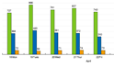
Cikal Tulang (Cissus quadrangularis) contains ketosteroids that can be used as a traditional obesity treatment. Objective: To evaluated the potential of Cikal Tulang (Cissus quadrangularis) extract in preventing obesity (loss of body weight and abdominal fat) in Galur Swiss mice. Methods: A quasi-experimental post-test only design was conducted from July to August 2021, involving 30 male Swiss albino mice aged 1.5 months with body weights of 18–30 grams. The mice were divided into five groups: negative control (high-fat diet and fructose solution), positive control (orlistat 15.6 mg/kgBW), and three treatment groups receiving Cissus quadrangularis extract at doses of 30, 90, and 180 mg/kgBW for 14 days. The extract was administered orally via a gastric sonde. Body weight and Lee index were obesity parameters, and abdominal adipose tissue was analyzed morphometrically using hematoxylin-eosin staining. Data were analyzed with One-Way ANOVA at a significance level of p < 0.05. Results: One-Way ANOVA test showed significant differences in Lee index among groups before treatment (p = 0.0097), with values >300 indicating obesity. Post-treatment, Lee index decreased across groups but without statistically significant differences (p = 0.878), with values remaining >300. Conclusion: There was no significant association between administering cikal tulang (Cissus quadrangularis) extract and its anti-obesity effect.
Keywords: anti-obesitas, cikal tulang (Cissus quadrangularis), fat
Downloads
Published
How to Cite
Issue
Section
License
Copyright (c) 2025 Maria Angeline Ivana Surya, Magdalena Leony Chandra, Jocelin Nathaniela, Ni Wayan Sucindra Dewi

This work is licensed under a Creative Commons Attribution-ShareAlike 4.0 International License.
Authors retain copyright and grant the Jurnal Kesehatan Andalas right of first publication with the work simultaneously licensed under a Creative Commons Attribution-ShareAlike (CC BY-SA 4.0) license that allows others to share (copy and redistribute the material in any medium or format) and adapt (remix, transform, and build upon the material) the work for any purpose, even commercially with an acknowledgement of the work's authorship and initial publication in Jurnal Kesehatan Andalas.
Authors are able to enter into separate, additional contractual arrangements for the non-exclusive distribution of the journal's published version of the work (e.g., post it to an institutional repository or publish it in a book), with an acknowledgement of its initial publication in Jurnal Kesehatan Andalas.
Authors are permitted and encouraged to post their work online (e.g., in institutional repositories or on their website) prior to and during the submission process, as it can lead to productive exchanges, as well as earlier and greater citation of published work (See The Effect of Open Access).