Distribusi Frekuensi Soil Transmitted Helminth pada Sayuran Selada (Lactuca sativa) yang Dijual di Pasar Tradisional dan Pasar Modern di Kota Padang
DOI:
https://doi.org/10.25077/jka.v3i3.183Abstract
Abstrak
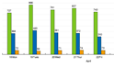
Penyakit kecacingan sampai saat ini masih merupakan masalah kesehatan di daerah tropis, termasuk Indonesia. Banyak faktor yang menyebabkan tingginya angka kejadian penyakit ini, salah satunya yaitu memakan sayuran mentah yang tidak dicuci bersih seperti selada atau kol yang sering dijadikan lalapan. Daun selada berposisi duduk sehingga dapat kontak langsung dengan tanah. Keadaan ini memungkinkan STH (Soil Transmitted Helminth) yang berada ditanah akan mudah menempel pada daun selada. Tujuan peneliti melakukan penelitian ini adalah untuk mengetahui ada atau tidaknya STH pada selada yang dijual di pasar tradisional dan modern di Kota Padang. Penelitian ini dilakukan di Laboratorium Parasitologi Fakultas Kedokteran Universitas Andalas sejak Bulan September-Desember 2013. Penelitian ini berjenis deskriptif menggunakan metode sedimentasi. Hasil yang peneliti dapatkan dari penelitian ini adalah ditemukan STH positif pada 32 dari 44 sayuran selada dari pasar tradisional di Kota Padang dengan persentase 73%. Tiga dari 5 sayuran selada dari pasar modern di Kota Padang dinyatakan positif dengan persentase 40%. Jenis STH terbanyak yang peneliti temukan pada penelitian ini adalah telur Ascaris sp (79%), larva Trichostrongylus orientalis (16%) dan telur cacing tambang (5%). Jadi, Terdapat kontaminasi STH pada selada yang dijual di pasar tradisional maupun pasar modern di Kota Padang.
Kata kunci: Soil Transmitted Helminth, sayuran selada, pasar tradisional, pasar modern
Abstract
Worm disease is still a health problem in the tropics, including Indonesia. Many factors contribute to the high incidence of this disease, one of which is eating unwashed raw vegetables such as lettuce or cabbage cleaner is often used as vegetables. Lettuce sitting position so that it can direct contact with the ground. This situation allows STH ( Soil Transmitted Helminths ) that are ground will easily stick to the leaves selada. Purposes of researchers conducted this study was to determine the presence or absence of STH on lettuce sold in traditional markets and modern in the city of Padang. This research was conducted in the Laboratory of Parasitology, Faculty of Medicine, University of Andalas since Month from September to December 2013. This study was descriptive using sedimentation method. Researchers get results of this study were found positive on STH 32 of 44 lettuce from traditional markets in the city of Padang with a percentage of 73%. Three of 5 lettuce of the modern market in Padang tested positive with a percentage of 40%. Most types of STH that researchers have found in this study are the eggs of Ascaris sp (79%), Trichostrongylus orientalis larvae (16%) and hookworm eggs (5%). So, There STH contamination on lettuce sold in traditional markets and modern markets in Padang.
Keywords: Soil Transmitted helminths, lettuce, traditional markets, modern market
Downloads
Published
How to Cite
Issue
Section
License
Authors retain copyright and grant the Jurnal Kesehatan Andalas right of first publication with the work simultaneously licensed under a Creative Commons Attribution-ShareAlike (CC BY-SA 4.0) license that allows others to share (copy and redistribute the material in any medium or format) and adapt (remix, transform, and build upon the material) the work for any purpose, even commercially with an acknowledgement of the work's authorship and initial publication in Jurnal Kesehatan Andalas.
Authors are able to enter into separate, additional contractual arrangements for the non-exclusive distribution of the journal's published version of the work (e.g., post it to an institutional repository or publish it in a book), with an acknowledgement of its initial publication in Jurnal Kesehatan Andalas.
Authors are permitted and encouraged to post their work online (e.g., in institutional repositories or on their website) prior to and during the submission process, as it can lead to productive exchanges, as well as earlier and greater citation of published work (See The Effect of Open Access).