Delayed Speech Dengan dan Tanpa Gangguan Pendengaran pada Anak Usia 6 Bulan sampai 3 Tahun di Jala Puspa RSPAL Dr. Ramelan Surabaya Periode 2017-2020
DOI:
https://doi.org/10.25077/jka.v10i2.1710Abstract
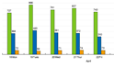
Late or untreated delayed speech can be a risk for social, emotional, behavioral and cognitive problems in adulthood. Delayed speech is associated with hearing loss, mental retardation, autism spectrum disorder (OSD), bilingualism, and lack of psychosocial stimuli. Objectives: To determine the prevalence of delayed speech with and without hearing loss in children aged six months until three years. Methods: This study used 872 medical records of delayed speech children aged six months until three years with and without hearing loss in 2017 until 2020 period at Jala Puspa RSPAL Dr. Ramelan, Surabaya. The presence or absence of hearing loss was examined using Brainstem Evoked Response Audiometry (BERA), and the degree of hearing loss was examined using Auditory Steady-State Response (ASSR) test. Results: From a total of 872 medical records data studied, 558 (64.0%) were males and 314 (36.0%) were females. The majority (44.8%) of delayed speech children were from the two-year age group. There were 565 (64.8%) delayed speech children with hearing loss and 307 (35.2%) without hearing loss. Of those with hearing loss, 48.0% showed a profound degree. There was an increase in delayed speech children without hearing loss compared to those with hearing loss, from 1:2.04 in 2017 to 1:1.12 in 2020. Conclusion: There was an increase in delayed speech children without hearing loss compared to those with hearing loss.
Keywords: Â ASSR, BERA, delayed speech, hearing lossDownloads
Additional Files
Published
Versions
- 2025-03-22 (2)
- 2021-09-12 (1)
How to Cite
Issue
Section
License
Authors retain copyright and grant the Jurnal Kesehatan Andalas right of first publication with the work simultaneously licensed under a Creative Commons Attribution-ShareAlike (CC BY-SA 4.0) license that allows others to share (copy and redistribute the material in any medium or format) and adapt (remix, transform, and build upon the material) the work for any purpose, even commercially with an acknowledgement of the work's authorship and initial publication in Jurnal Kesehatan Andalas.
Authors are able to enter into separate, additional contractual arrangements for the non-exclusive distribution of the journal's published version of the work (e.g., post it to an institutional repository or publish it in a book), with an acknowledgement of its initial publication in Jurnal Kesehatan Andalas.
Authors are permitted and encouraged to post their work online (e.g., in institutional repositories or on their website) prior to and during the submission process, as it can lead to productive exchanges, as well as earlier and greater citation of published work (See The Effect of Open Access).