Unveiling the Antibacterial Activity of Petai Seed Ethanol Extract (Parkia speciosa Hassk) with the Kirby-Bauer Method
DOI:
https://doi.org/10.25077/jka.v13i2.2420Abstract
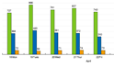
The increasing number of antibiotic resistance cases have to seek alternative treatments, including the petai plant (Parkia speciosa Hassk). Petai seeds primarily contain chemical compounds such as tannins, saponins, alkaloids, and flavonoids, which are known for their antibacterial properties. Objective: To determined the antibacterial activity of petai seed ethanol extract (P. speciosa Hassk) against Staphylococcus aureus, Pseudomonas aeruginosa, and Salmonella typhi. Methods: This experiment used the Kirby-Bauer Method. Petai seeds were extracted with ethanol using maceration techniques, and the viscous extract was dissolved into concentrations of 25%, 50%, 75%, and 100%. Screening paper soaked in the extract was placed on agar plates inoculated with the test bacteria, and the plates were incubated for 24 hours. The inhibition zones were measured with a caliper, and the data were analyzed statistically. Results: The study found that the ethanol extract of petai seeds exhibited moderate antibacterial activity against Staphylococcus aureus and Pseudomonas aeruginosa and weak antibacterial activity against Salmonella typhi. Conclusion: Increasing the concentration of the extract significantly enhanced its antibacterial effect against Staphylococcus aureus and Pseudomonas aeruginosa, indicating that petai seed ethanol extract could be a potential alternative treatment for bacterial infections.
Keywords: Â antibacterial, extract ethanol, Kirby-Bauer method, petai seedDownloads
Published
Versions
- 2025-03-19 (2)
- 2025-01-09 (1)
How to Cite
Issue
Section
License
Copyright (c) 2025 Yustini Alioes, Altio Efendi, Mario Arya Ramadhan

This work is licensed under a Creative Commons Attribution-ShareAlike 4.0 International License.
Authors retain copyright and grant the Jurnal Kesehatan Andalas right of first publication with the work simultaneously licensed under a Creative Commons Attribution-ShareAlike (CC BY-SA 4.0) license that allows others to share (copy and redistribute the material in any medium or format) and adapt (remix, transform, and build upon the material) the work for any purpose, even commercially with an acknowledgement of the work's authorship and initial publication in Jurnal Kesehatan Andalas.
Authors are able to enter into separate, additional contractual arrangements for the non-exclusive distribution of the journal's published version of the work (e.g., post it to an institutional repository or publish it in a book), with an acknowledgement of its initial publication in Jurnal Kesehatan Andalas.
Authors are permitted and encouraged to post their work online (e.g., in institutional repositories or on their website) prior to and during the submission process, as it can lead to productive exchanges, as well as earlier and greater citation of published work (See The Effect of Open Access).