102 Jurnal Kesehatan Andalas. 2015; 4(1) Pola Komplikasi Kronis Penderita Diabetes Melitus Tipe 2 Rawat Inap di Bagian Penyakit Dalam RS. Dr. M. Djamil Padang Januari 2011 - Desember 2012
DOI:
https://doi.org/10.25077/jka.v4i1.207Abstract
Abstrak
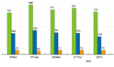
Diabetes Melitus (DM) merupakan suatu kelompok penyakit metabolik dengan karakteristik hiperglikemia. DM tipe 2 adalah yang paling sering ditemukan. Komplikasi kronis DM tipe 2 yaitu mikrovaskular dan makrovaskular yang dapat menurunkan kualitas hidup penderita. Tujuan penelitian ini adalah untuk memperoleh gambaran tentang insidensi penderita DM tipe 2 dengan komplikasi kronis. Penelitian deskriptif ini dilakukan dengan mengambil data pada rekam medik penderita DM tipe 2 dengan komplikasi kronis yang dirawat inap di bagian Penyakit Dalam RS.Dr. M. Djamil, Padang Januari 2011-Desember 2012. Penelitian dilakukan dari Februari 2013-April 2013 di bagian rekam medik RS. Dr. M. Djamil Padang. Data didapatkan sebanyak 261 pasien, dari jumlah tersebut didapatkan 197 pasien memiliki komplikasi kronis DM tipe 2. Data dikategorikan berdasarkan jenis komplikasi makrovaskular dan mikrovaskular. Hasil penelitian menunjukkan bahwa penderita dengan komplikasi kronis makrovaskular (66,5%) dan mikrovaskular (81,7%). Terdapat perubahan insidensi dalam dua tahun yaitu dari tahun 2011 dengan 2012. Komplikasi kronis yang paling sering terjadi adalah nefropati diabetik (42,6%) pada perempuan <60 tahun.
Kata kunci: diabetes melitus, komplikasi mikrovaskular, komplikasi makrovaskular
Abstract
Diabetes mellitus is a group of metabolic diseases with characterized by hyperglycemia. Type 2 diabetes is the most common disease in the world. Chronic complications of type 2 diabetes are microvascular and macrovascular complications that can reduce the quality of life of patients. The objective of this study was to obtain a picture of the incidence of type 2 diabetic chronic complications. This descriptive study was conducted by taking medical record data of hospitalized type 2 diabetic patients with chronic complications inInternal Medicine Department Dr. M. Djamil hospital, Padang on January 2011-December 2012. The study was conducted from February 2013-April 2013 at the hospital medical record Dr. M. Djamil, Padang. This study was conducted on 261 patients, from that number 197 patients have chronic complications of type 2 diabetes mellitus. Data were categorized by type of macrovascular and microvascular complications.The results showed that patients with chronic complications of macrovascular (66,5%) and microvascular (81,7%). There is a change in incidence from 2011 to 2012. The most common of chronic complications is diabetic nephropathy (42.6%). Chronic microvascular and macrovascular complications are different incidence in two years, the most common is diabetic nephropathy which often occurs in women <60 years.
Keyword: diabetes mellitus, microvascular complication, macrovacular complication.
Downloads
Published
How to Cite
Issue
Section
License
Authors retain copyright and grant the Jurnal Kesehatan Andalas right of first publication with the work simultaneously licensed under a Creative Commons Attribution-ShareAlike (CC BY-SA 4.0) license that allows others to share (copy and redistribute the material in any medium or format) and adapt (remix, transform, and build upon the material) the work for any purpose, even commercially with an acknowledgement of the work's authorship and initial publication in Jurnal Kesehatan Andalas.
Authors are able to enter into separate, additional contractual arrangements for the non-exclusive distribution of the journal's published version of the work (e.g., post it to an institutional repository or publish it in a book), with an acknowledgement of its initial publication in Jurnal Kesehatan Andalas.
Authors are permitted and encouraged to post their work online (e.g., in institutional repositories or on their website) prior to and during the submission process, as it can lead to productive exchanges, as well as earlier and greater citation of published work (See The Effect of Open Access).